

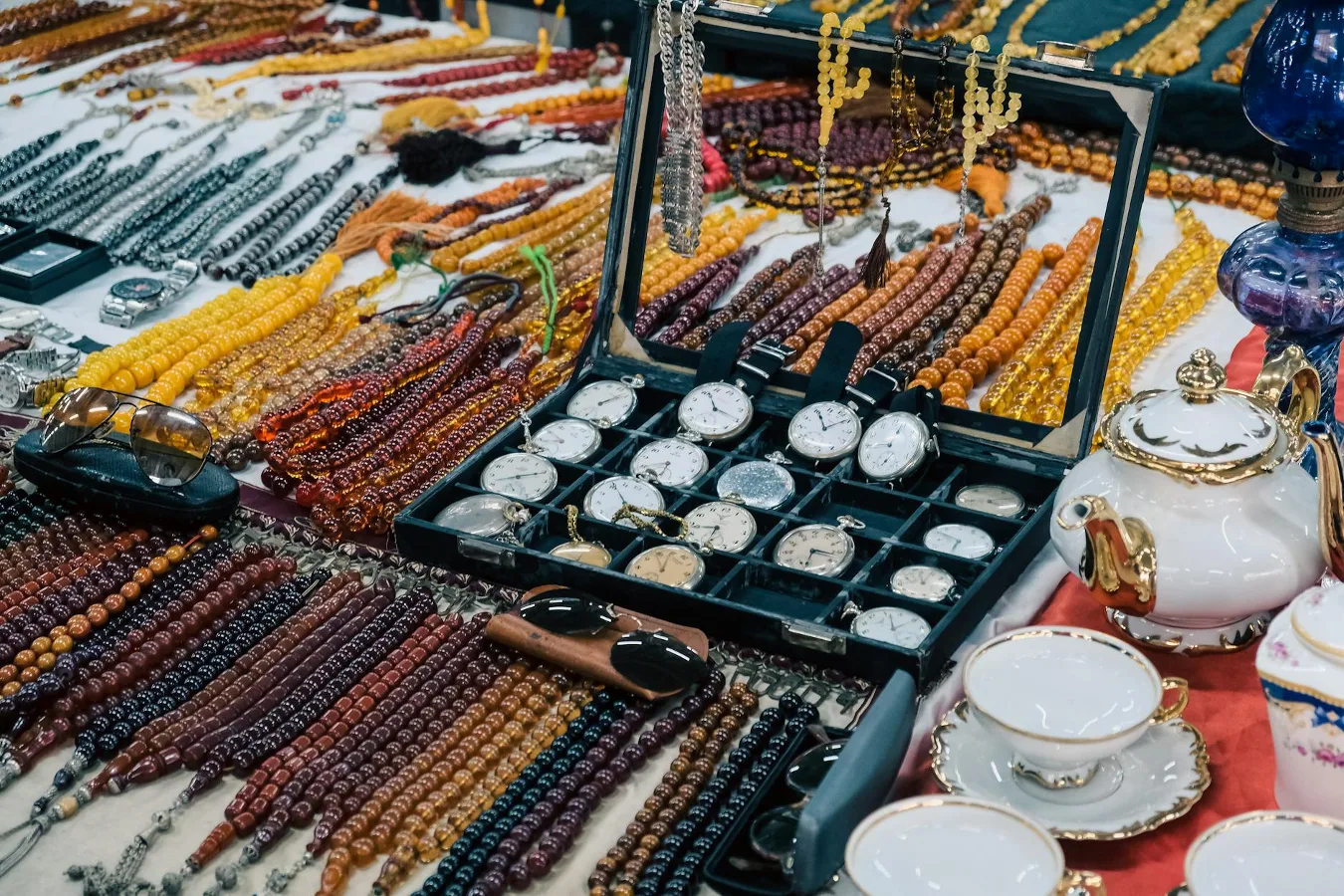
If you are searching for dropship fashion accessories and jewelry suppliers in the Middle East and Africa, the real task is not just finding a source list. It is finding suppliers that can match your target customer, ship consistently, and handle the product details that matter in jewelry and accessories: finish, material quality, packaging, and communication.
For US-based sellers, this market can be attractive because it may offer distinctive styles, trend-led pieces, and access to suppliers serving fast-moving local demand. The challenge is that sourcing from any region comes with trade-offs. Lead times, customs handling, quality consistency, and return logistics can vary widely, so the best supplier is rarely the one with the biggest catalog.
Start with the full guide
For the complete topic overview, read 1950s Fashion Accessories Guide
Start with the buyer scenario, not the supplier list
Before comparing suppliers, define what kind of store you are building. A seller focused on everyday fashion jewelry has very different needs from a boutique that sells statement earrings, modest fashion accessories, or giftable pieces. The supplier should fit the product strategy first.
Ask a few practical questions:
- Are you trying to sell low-ticket impulse items, or higher-margin fashion pieces?
- Do you need trend-driven styles that change often, or repeatable core products?
- Will your buyers care most about price, packaging, or design uniqueness?
- Can your store handle longer shipping windows if the product selection is stronger?
This matters because many dropshipping problems begin with a mismatch between the supplier’s strengths and the store’s promise. A supplier can look excellent on paper and still be a poor fit if the catalog, shipping profile, or customer service style does not match your audience.
What makes a supplier worth considering
For jewelry and fashion accessories, supplier evaluation should go beyond product photos. The most important factors are usually catalog consistency, material transparency, fulfillment reliability, packaging, and how clearly the supplier communicates order status.
Material and finish quality
Jewelry and accessories are highly sensitive to material choices. Even in a dropship model, buyers notice plating wear, clasp strength, stitching quality, color fading, and whether an item looks more polished in person than it did online. If a supplier does not clearly describe materials, treat that as a warning sign.
Common details to check include:
- base metal or alloy information
- plating type and finish
- stone or bead description
- chain, clasp, and fastening quality
- skin-contact considerations for sensitive customers
You do not need a laboratory report to make a smart choice, but you do need enough detail to understand what the customer is actually receiving. If a product listing is vague, expect more variation and more customer questions.
Catalog depth versus catalog quality
Large catalogs can be useful, but they can also hide inconsistency. A focused catalog with clear product details often performs better than an enormous selection with weak documentation. For fashion accessories, the best suppliers usually have a recognizable style, not just a long product feed.
Look for signs that the catalog is maintained well: consistent naming, accurate photos, matched color options, and repeatable product categories. A supplier that frequently changes listings without warning can create inventory problems for your store.
Fulfillment and shipping reality
Shipping is one of the biggest decision points when sourcing across regions. Even if the supplier offers attractive products, your customer experience depends on how orders are packed, handed off, and tracked.
Review these operational details:
- where orders are shipped from
- which carriers are used
- whether tracking is reliable and readable
- how long order processing usually takes
- how damaged or missing items are handled
A common misconception is that a supplier can be judged only by advertised shipping speed. For jewelry and accessories, packaging quality is just as important. Lightweight items can arrive bent, scratched, tangled, or broken if the supplier does not use the right protective materials.
Middle East and Africa sourcing: what to expect
Sourcing from the Middle East and Africa can be a strong option for sellers looking for distinctive aesthetics, regional craftsmanship, or access to suppliers aligned with local fashion trends. But the sourcing environment is not uniform. Countries, cities, and supplier types can differ substantially in infrastructure, product focus, and export readiness.
That means your sourcing strategy should be practical rather than broad. A supplier in a major trade hub may have stronger logistics and catalog management than a smaller operation with more unique designs. On the other hand, smaller suppliers may offer niche appeal that larger catalog-driven sellers cannot match.
For US sellers, the key question is not whether the region is “good” in general. It is whether the individual supplier can deliver enough consistency for ecommerce operations. If you are planning to scale, consistency matters more than a one-time bargain.
Potential advantages
- Access to styles that feel less generic than mass-market accessory catalogs
- Potential alignment with regional fashion trends and cultural aesthetics
- Opportunity to differentiate a store with a distinct product story
- Possible access to suppliers with flexible product assortments
Real-world constraints
- Longer or less predictable shipping windows may affect customer expectations
- Communication can vary depending on supplier structure and export experience
- Product descriptions may be less standardized than on large marketplace platforms
- Return handling can be harder to manage across borders
The practical takeaway: if you are entering this sourcing lane, build around clarity. The more you can confirm before listing a product, the fewer post-sale issues you will deal with later.
Trade-offs you need to weigh before listing products
Every supplier choice in this niche involves trade-offs. The right decision usually depends on which problem you are willing to manage.
| Decision factor | Lower-risk choice | Potential downside |
|---|---|---|
| Shipping speed | Supplier with stable processing and tracking | May have a smaller catalog or higher product cost |
| Product uniqueness | Distinctive regional styles or niche pieces | May be harder to restock consistently |
| Price competitiveness | Lowest-cost supplier | May come with weaker packaging or weaker support |
| Brand presentation | Supplier offering better packaging or private label options | May require stricter order minimums or added coordination |
The wrong approach is to treat all of these as equally easy to optimize. In reality, improving one area often creates pressure in another. For example, a supplier with attractive designs may not be the fastest at fulfillment. A supplier with strong logistics may not offer the most distinctive collection.
What to ask before you commit to a supplier
Supplier communication is one of the clearest indicators of long-term reliability. You are not just checking whether they reply. You are checking whether they can answer operational questions clearly and consistently.
Useful questions include:
- Where do you ship from, and how is tracking provided?
- What happens if an item arrives damaged or incorrect?
- Can product details such as materials and dimensions be confirmed?
- Are product photos representative of the final item?
- Do you support branded packaging or neutral packaging?
- How often do catalog items go out of stock?
If answers are vague, inconsistent, or overly promotional, treat that as a signal to slow down. Strong suppliers tend to be specific. They know their fulfillment process and can explain it plainly.
Packaging and presentation matter more than many sellers expect
Jewelry and fashion accessories are highly visual, which makes packaging part of the product experience. A necklace, bracelet, or pair of earrings can be inexpensive to ship but still create a premium impression if it arrives protected and neatly presented.
Overlooked details that affect customer satisfaction include:
- anti-tangle or anti-scratch packaging
- individual item separation
- clean labeling
- sealed pouches or boxes
- protection against bending during transit
This is one of the most common blind spots in accessory dropshipping. Sellers often focus on product imagery and forget that packaging influences damage rates, unboxing experience, and perceived quality. If your supplier does not handle this well, you may end up paying for it through replacements and refunds.
How to compare suppliers without overcomplicating the process
You do not need an elaborate framework to make a good decision. A short, disciplined comparison is usually enough.
- Shortlist suppliers that clearly match your product type.
- Review material descriptions, shipping terms, and return handling.
- Check whether product photos, sizes, and variants are consistent.
- Look for clear communication and realistic order processing information.
- Compare how each supplier handles packaging and damaged items.
- Choose the option that best fits your store promise, not just your margin target.
If you are unsure between two suppliers, favor the one that reduces downstream support issues. In dropshipping, operational stability often beats a slightly lower product cost.
Common mistakes when sourcing accessories and jewelry
Many new sellers make similar errors when evaluating suppliers in this category. Avoiding these can save time and customer frustration.
- Choosing only by price: low cost can hide weak packaging, inconsistent materials, or poor support.
- Ignoring size details: rings, bracelets, chains, and hair accessories can all create expectation mismatches if measurements are unclear.
- Overlooking style consistency: a supplier with random product quality makes it harder to build a coherent brand.
- Skipping communication checks: if pre-sale questions are hard to get answered, post-sale issues will be harder too.
- Assuming all jewelry is alike: base metals, plating, and closures change customer outcomes significantly.
One practical nuance: buyers often judge accessories more harshly than apparel basics because small defects are easier to spot. A slight finish issue that might be tolerated in another product category can trigger a return in jewelry.
Better alternatives if direct dropshipping is not enough
Direct dropshipping is not the only sourcing model worth considering. Depending on your store goals, you may be better served by a hybrid approach.
- Small-batch wholesale: useful if you want stronger quality control and better packaging consistency.
- Private label accessories: helpful for building brand identity if the supplier supports customization.
- Marketplace-backed sourcing: may provide easier comparison shopping, but not always better branding.
- Local fulfillment for bestsellers: practical if you want faster shipping on your highest-volume items.
A hybrid model can reduce risk. For example, you might dropship trend items while holding a small inventory of core pieces that sell steadily. That approach can improve shipping speed where it matters most.
Best next steps for US sellers
If your goal is to source fashion accessories or jewelry from suppliers in the Middle East and Africa, start with a narrow, controlled test. Pick a small number of products that fit your store positioning, then evaluate the supplier against the criteria that matter most: material transparency, packaging, shipping reliability, and communication.
Do not rush into a broad catalog launch. A careful first round gives you better information about how the supplier operates under real order conditions. That is especially important in categories where product appearance and delivery condition affect customer trust immediately.
If the supplier passes your basic checks, build from there. If not, move on quickly. In this niche, the best long-term result usually comes from selecting fewer suppliers and managing them well rather than constantly chasing the newest product feed.
FAQ
Can I dropship fashion accessories and jewelry from the Middle East or Africa to the United States?
Yes, if the supplier can handle export shipping reliably and you are comfortable with the fulfillment terms. The key is confirming tracking, packaging, and delivery expectations before listing products.
What matters most when choosing a jewelry dropshipping supplier?
Material transparency, packaging quality, shipping reliability, and communication usually matter most. Price matters too, but it should not be the only filter.
Should I avoid suppliers that do not provide detailed material information?
Usually, yes. Jewelry buyers care about finish, durability, and skin contact. If the supplier is vague about materials, it is harder to set accurate expectations.
Is private label a better option than direct dropshipping?
Not always. Private label can improve branding, but it may require more coordination and often works better once you already know which styles sell.
What is the biggest mistake new sellers make in this niche?
They choose suppliers based on catalog appeal alone and ignore packaging, shipping, and communication. That usually leads to avoidable support issues later.