

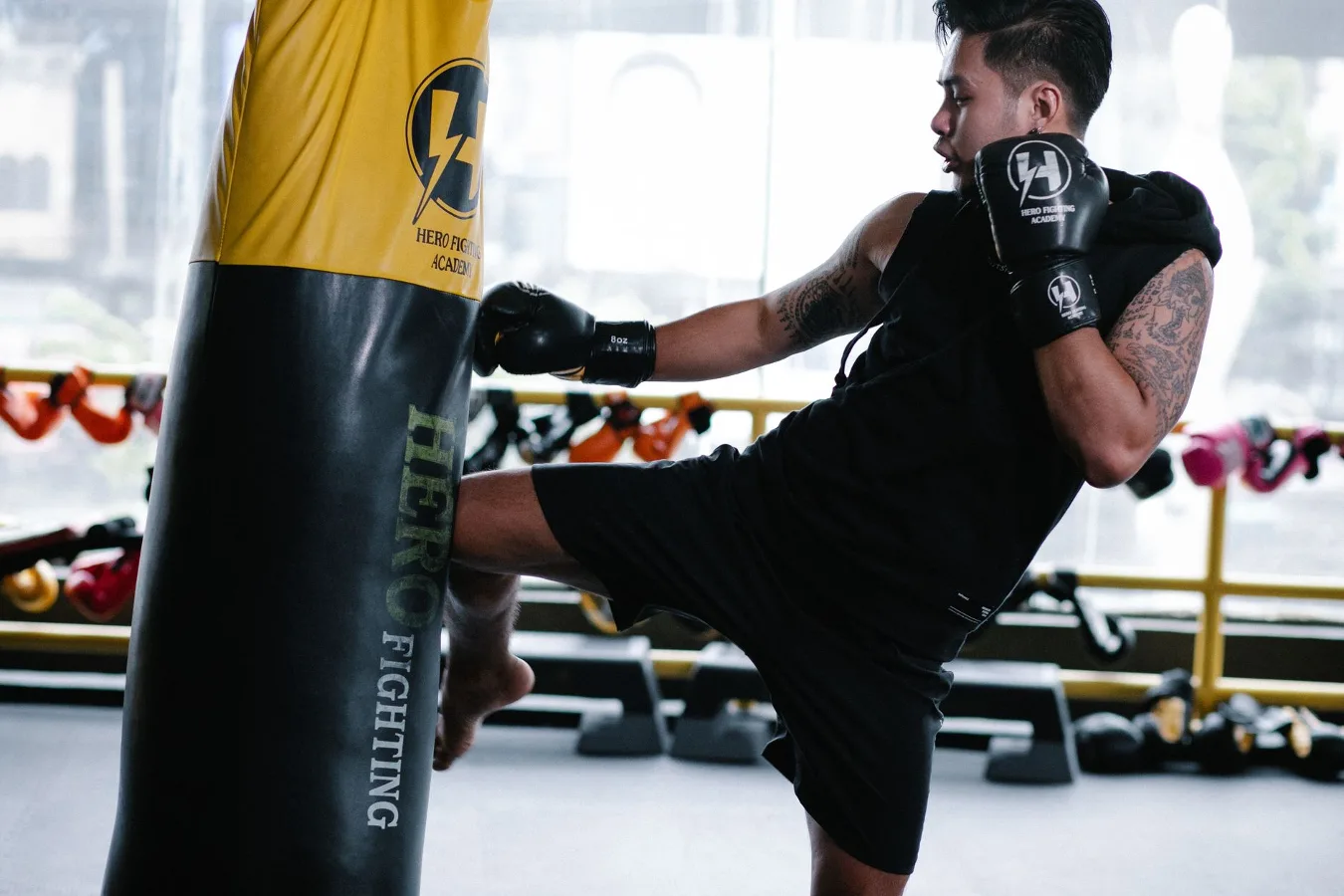
What a free standing punch and kick bag is best for
A free standing punch and kick bag is a good fit when you want striking practice without drilling into walls or hanging from a ceiling joist. It is especially useful for apartments, garages, spare rooms, and home gyms where permanent mounting is impractical. hanging punching bag offers more detail on this point.
These bags appeal to people who want a flexible training setup. They can be moved more easily than a suspended heavy bag, and many are designed for mixed striking, including punches, kicks, knees, and general cardio workouts. The trade-off is that they usually behave differently from hanging bags: some move less naturally, some rebound more, and some need careful base filling to stay steady.
If your main goal is realistic striking feedback, a free standing model can work well, but stability and height matter more than they do with many other bags. If your goal is simple conditioning, rhythm work, or beginner technique practice, the convenience can outweigh the limitations.
How to decide whether this style fits your training
The right choice starts with your space and your training habits. A free standing punch and kick bag makes the most sense when you need a non-permanent setup, want to avoid installation work, or plan to share the space with other household uses.
Use cases where it tends to make sense
- Apartment or condo training: A floor-standing bag can reduce the need for hardware-mounted equipment.
- Home gyms with limited ceiling height: Tall hanging bags may not fit comfortably in every room.
- Mixed striking practice: Many users want a single bag for punches and kicks rather than separate equipment.
- Beginners building consistency: A simpler setup can make it easier to start training regularly.
- Multi-user households: A movable bag may be easier to place, store, or shift as needed.
There are also cases where another option may be better. If you want a very realistic heavy-bag feel for power shots, a suspended bag often gives a different kind of swing and resistance. If you need frequent relocations, a lighter freestanding model may be easier to live with than a larger base-filled unit. Matching the bag to your space matters as much as the striking surface itself.
Step-by-step criteria for comparing models
Most shoppers do better by comparing a few practical factors instead of focusing only on appearance. For this type of bag, the important details usually come down to stability, height, striking surface, rebound, and how much assembly or upkeep the base requires.
1. Stability under real striking
Stability is the biggest decision factor. A bag that looks sturdy in a product photo may still shift too much once you start throwing repeated body shots or kicks. Base design, overall weight when filled, and the shape of the striking column all affect how controlled the bag feels.
Look for a setup that matches your training intensity. Light technical work may be fine with a more movable base, while harder kick sessions usually demand a more substantial foundation. For many buyers, the overlooked issue is not whether the bag stands up, but whether it stays where you want it after combinations.
2. Height and striking zones
Not every freestanding bag is ideal for every user. Height matters if you plan to practice head-height punches, roundhouse kicks, knees, or long combinations that move from body to head level. A taller profile can provide a more complete target range, while shorter units may suit basic cardio work or boxing-only practice. boxing bag basics for beginners offers more detail on this point.
Think about your own height and reach as well. A bag that seems tall enough in the listing may feel limited once you start using it with proper stance and footwork. If multiple people will use it, a more versatile height range is usually safer than a model that only fits one training style.
3. Rebound and target feel
Freestanding bags do not all respond the same way. Some have a firmer striking surface, while others return more movement after contact. That difference affects how combinations flow and how much feedback you get from each strike.
There is a common misconception that more rebound is automatically better. In practice, too much movement can disrupt timing and make the bag frustrating for kick work. Too little movement can feel stiff and less forgiving for beginners. The best choice depends on whether you want rhythm drills, power practice, or a mix of both.
4. Base type and fill method
Many free standing punch and kick bags rely on a fillable base. Water and sand are the most common approaches, and each has practical trade-offs. Water is easier to handle and change, while sand can add more density but is heavier to move and refill.
Before buying, think about where the bag will live. If you need to move it often, a full sand base may become cumbersome. If the bag will stay in one place, a denser fill may be more appealing. Also consider the surface under the base, since flooring can affect both grip and long-term wear. Canvas Crossbody Bag Buying Guide offers more detail on this point.
5. Assembly, relocation, and storage
A standalone bag often sounds simple, but assembly and repositioning still matter. Some models are easy to set up and can be moved by one person when empty. Others become difficult to relocate after filling, especially if the base is bulky or awkwardly shaped.
This becomes an overlooked factor for shared rooms, garages that also store cars, or home gyms that need to change layout. If you expect to move the bag even occasionally, prioritize a design that is realistic to handle in your own space rather than a heavier model that will stay in place most of the time.
Who this type of bag suits best
A free standing punch and kick bag is not a universal solution, but it fits several common buyer profiles well. The most satisfied buyers usually know what they are giving up in exchange for convenience.
Good fit for
- Beginners: Easy setup can reduce friction and help build a routine.
- Casual fitness users: Great for cardio-style striking sessions and stress relief.
- Kickboxing and cardio boxing fans: Useful for mixed combinations without permanent installation.
- Renters: A non-mounted option is often easier to live with.
- Small-space users: Some units work better than hanging setups where layout is tight.
Less ideal for
- Power-focused strikers: A hanging heavy bag may offer a more convincing resistance profile.
- Users seeking strong swing motion: Freestanding designs often behave differently from suspended bags.
- Very aggressive kick sessions on uneven floors: Stability can become a real limitation.
- People who want a set-it-and-forget-it fixture: Base maintenance and movement may be part of the experience.
Examples of how the bag choice changes by scenario
It helps to think in real-world terms rather than product categories alone. The same bag that works well for one home can be frustrating in another.
Example: apartment fitness corner
If you have a compact room and neighbors below, a freestanding option can be attractive because it avoids ceiling hardware. In that setting, the main concerns are footprint, floor protection, and whether the bag shifts too much during body shots. A stable but not overly massive unit may be the most practical compromise.
Example: garage training space
A garage often offers more flexibility, but temperature swings and floor conditions can affect the bag and base. If the floor is slightly uneven, a bag that depends heavily on perfect balance may feel less reliable. In this scenario, a model with a broad base and a forgiving striking surface is often easier to live with.
Example: beginner kickboxing routine
For a beginner, a free standing punch and kick bag is often less intimidating than a hanging heavy bag. It gives a clear target for combinations and footwork drills without requiring much setup. The drawback is that beginners can mistake easy installation for high performance; if the bag wobbles too much, technique practice becomes inconsistent.
Checklist before you buy
A quick checklist can prevent disappointment after delivery. The best purchase is usually the one that fits your space and training style, not the one with the most aggressive marketing.
- Measure the space where the bag will sit, including clearance for movement around it.
- Decide whether you need boxing-only use or mixed punches and kicks.
- Check whether the height suits your reach and target zones.
- Consider how much base filling you are willing to manage.
- Think about whether the bag will stay in one spot or need to be moved.
- Review the floor surface and whether it can handle a filled base safely.
- Match the bag’s responsiveness to your goal: cardio, technique, or harder striking.
- Look for a setup that is realistic to assemble and maintain over time.
Common mistakes buyers make
Several buying mistakes show up again and again with this category. None of them are dramatic, but each can make the bag less satisfying once training starts.
- Choosing by height alone: A tall bag is not automatically stable enough for kick work.
- Ignoring the base: The base is often what determines whether the bag feels dependable.
- Overestimating portability: A filled freestanding bag is much less movable than it looks.
- Expecting a hanging-bag feel: Freestanding models serve a different purpose and do not replicate every aspect of suspended training.
- Buying for hard power shots without checking stability needs: The bag may be fine for light work but disappointing for heavy contact.
- Forgetting floor protection: Slippage and surface wear can become issues over time.
Practical alternatives if a free standing bag is not quite right
If you are close to deciding but still unsure, consider the main alternatives. Each one solves a different problem.
Suspended heavy bag: Better for a more traditional swinging feel and harder striking sessions, but it requires mounting support and more permanent placement.
Wall-mounted striking systems: Useful when floor space is limited, though they depend on proper installation and structural support.
Freestanding dummy or torso-style trainers: Helpful for body-shot and kick targeting, but they may offer a narrower striking profile.
Reflex or speed-focused bags: Good for timing and hand-eye coordination, but not a replacement for a general-purpose punch-and-kick setup.
The right choice depends on whether you value realism, convenience, portability, or space efficiency most.
Choosing with long-term use in mind
A free standing punch and kick bag is usually a commitment to convenience, but convenience only matters if the bag stays useful after the novelty fades. For long-term satisfaction, focus on whether it will still fit your routine after the first few weeks.
Ask a simple question: will this bag still make sense when the room is rearranged, your training intensity changes, or someone else needs the space? If the answer is yes, the model is probably a better fit. If the answer depends on perfect conditions, a different style of bag may be safer.
The best buy is rarely the one with the most features. It is the one that balances stability, target height, ease of setup, and realistic day-to-day use for your home.