

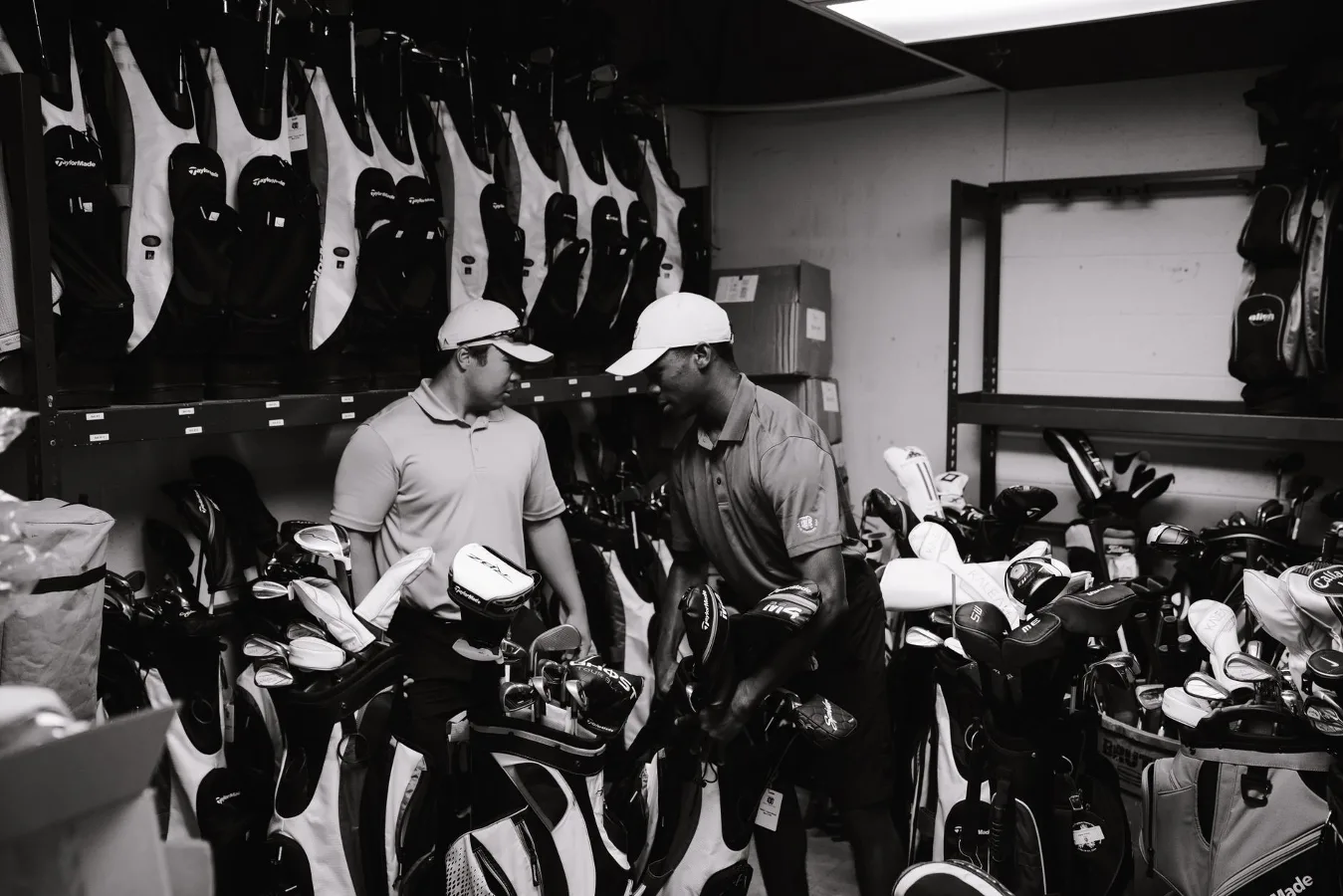
Most golfers can carry 14 clubs in a golf bag during a round. That is the standard limit used in the Rules of Golf, so for most players in the United States the short answer is simple: your bag can hold more or fewer clubs physically, but you usually should not play with more than 14. best golf bag styles for different players offers more detail on this point. how to organize your golf bag offers more detail on this point.
The better question is not just how many clubs fit, but which clubs belong in the bag and how the bag itself affects organization, weight, and ease of use. A crowded bag can be awkward to carry, while an underfilled bag may leave you without the right shot options. The ideal setup depends on your skill level, the type of bag you use, and the courses you play. choosing the right golf club setup offers more detail on this point.
The quick answer: 14 is the standard limit
In most rounds governed by the Rules of Golf, a player may carry no more than 14 clubs. That number is a playing limit, not a bag capacity rating. Many golf bags can physically hold 14 clubs, and some can hold more if you count room for accessories or if the dividers are generous. But if you are playing by the rules, 14 is the number that matters.
For a casual practice session, a range day, or a non-competitive outing, you may choose to carry fewer clubs. That can make the bag lighter and simpler to manage. The key is to understand the difference between bag space and rules compliance.
What a player actually puts in the bag
A full 14-club setup usually includes a mix of woods, irons, wedges, and a putter. A common structure looks like this:
- Driver
- One or two fairway woods or hybrids
- A set of irons, often from a long iron or hybrid replacement down through the short irons
- Specialty wedges for approach, sand, or control shots
- Putter
That does not mean every golfer should use the same combination. Some players prefer more forgiving hybrids instead of long irons. Others choose extra wedges because they rely on partial shots around the green. The right blend depends on distance gaps, confidence, and the kinds of misses you tend to make.
Buyer scenario: how bag type changes the experience
If you are shopping for a golf bag on a Bags-focused site like fashionspros, the club limit is only part of the decision. The bag’s structure changes how convenient a 14-club setup feels in everyday use.
Carry bags and stand bags
Carry bags and stand bags are designed for golfers who walk the course or want a lighter setup. They can still hold a full set, but a heavily loaded bag may feel bulky. If the top is crowded, pulling clubs in and out can be less comfortable, especially during a quick round.
For walkers, the practical question is often whether the bag can hold 14 clubs without becoming unbalanced or hard to carry. A bag with a smart divider layout can make a full set feel manageable, while a simpler top may tangle shafts more easily.
Cart bags
Cart bags usually offer more storage and a more stable shape. They are a strong fit for golfers who ride most of the time and want room for rain gear, balls, rangefinders, or extra layers. Because they are built for cart use, they often make a full 14-club set easier to organize.
One practical trade-off: more storage can mean more temptation to overpack. A bag can feel efficient on a cart and still become cluttered if every pocket is filled with extras.
Tournament or staff-style bags
Tour-style bags are larger and often more spacious, but size does not change the playing limit. They are useful if you want premium construction and more room for accessories, but they are not automatically better for most recreational golfers. They can also be heavier and less convenient if you walk regularly.
Trade-offs in carrying fewer than 14 clubs
Many golfers never use all 14 slots. That is not necessarily a mistake. A shorter set can create a cleaner, more intentional setup.
Advantages of carrying fewer clubs:
- Less weight to carry
- Faster club selection
- More room in the bag for rain gear or accessories
- Simpler decision-making on the course
Possible drawbacks:
- Fewer distance options
- Larger gaps between clubs
- Less flexibility in windy or unfamiliar conditions
- More pressure on each club to cover multiple shots
This is one of the most overlooked parts of golf bag setup: a full bag is not always a better bag. A beginner may benefit more from a simpler set with clear distance gaps than from a maxed-out 14-club arrangement that is hard to understand.
Material and spec factors that affect club storage
Bag capacity is not only about the number of clubs. Construction details influence how comfortably those clubs fit.
Divider layout
A 4-way, 5-way, or 14-way top changes organization. Fewer dividers can make club removal quicker, but shafts may bump together more. A 14-way top keeps each club separated, which can reduce clatter and make club selection easier, though it can also create tighter individual slots depending on shaft size and grip shape.
If you use oversized grips, headcovers, or a mix of iron lengths, divider design matters more than many shoppers expect.
Bag opening and shaft crowding
A bag may technically hold 14 clubs, but crowded placement can make them hard to reach. This is especially noticeable when the bag is full of headcovers or when several clubs share the same slot. The bag may look organized from the outside while still feeling cramped in play.
Weight distribution
As club count rises, balance becomes more important. A bag with poor weight distribution can tip when set down, feel awkward on a trolley, or shift uncomfortably while walking. If you are choosing between similar bags, the way the top and strap system handle a full set can matter as much as pocket space.
What beginners should think about first
For new golfers, the goal is not to fill every slot immediately. The better approach is to build a set that matches current needs and learning pace.
A beginner usually benefits from clubs that are easy to launch, predictable, and versatile. That might mean using hybrids instead of hard-to-hit long irons, or carrying a smaller number of wedges until distance control improves.
A common misconception is that beginners need a completely full bag to play properly. In reality, a manageable set can make practice more productive because it reduces decision fatigue and helps you learn what each club does.
Common mistakes when setting up a golf bag
- Overpacking the bag: More gear does not always mean better golf. Too many extras can make the bag heavier and harder to use.
- Ignoring distance gaps: Choosing clubs without checking how far they carry can leave awkward overlaps or gaps.
- Forgetting the rules: Carrying more than 14 clubs in a governed round can create a penalty issue.
- Choosing a bag that is too small: A compact bag may be fine for a half set, but cramped storage becomes frustrating with a full set.
- Buying for looks alone: Style matters, but divider layout, carry comfort, and storage are usually more important.
How to decide what belongs in your bag
A useful way to build your set is to start with the clubs you trust most and then fill in the shots you need. Ask yourself a few practical questions:
- Do I use a driver every round, or would a fairway wood or hybrid be more reliable off the tee?
- Are there long approach shots that I cannot cover comfortably?
- Do I rely on specialty wedges around the green?
- Is my putter the club I use most often and most confidently?
- Do I walk enough that lighter weight matters?
That approach helps you choose a club mix based on actual play, not on what looks complete in the bag.
Alternatives if you do not want a full set
Not every golfer needs 14 clubs. A shorter setup can be a practical alternative for several situations:
- Practice rounds: Fewer clubs can keep focus on contact and distance control.
- Travel: A shorter set may simplify packing and reduce weight, depending on the travel setup.
- New golfers: Fewer clubs can make learning easier and keep the bag approachable.
- Short courses: If the layout does not require long-distance coverage, a reduced set can be enough.
The trade-off is flexibility. If you remove clubs, think carefully about which shots become harder to cover. The best reduced set is still intentional.
Next steps for choosing the right golf bag setup
If you are building or reorganizing your golf bag, start with the basics: count your clubs, check the rules for the format you play, and make sure the bag matches the way you move around the course. A walk-friendly stand bag, a stable cart bag, or a larger tour-style bag all have different strengths.
From there, focus on the practical details that affect daily use: divider layout, overall weight, pocket access, and how easily the clubs come in and out. Those factors usually matter more than whether the bag can physically squeeze in a few extra shafts.
If your setup feels cluttered, simplify it. If you are missing key shots, adjust your club mix before buying a bigger bag. The best golf bag is not the one with the most room; it is the one that makes your set easy to manage and your round easier to play.
Frequently asked questions
Can you have more than 14 clubs in a golf bag?
You can physically carry more, but in a round governed by the Rules of Golf, 14 is the standard maximum. Carrying more than that can create a rules penalty.
Do all golf bags hold 14 clubs?
Not always. Many do, but some compact bags are more comfortable with a smaller set. Physical capacity and playing rules are not the same thing.
What clubs should a beginner carry?
A beginner usually does well with a simple mix of clubs that are easy to hit and cover the most common distances. Hybrids, forgiving irons, one or two wedges, and a putter are often more practical than a complicated setup.
Is a 14-way divider necessary?
No. A 14-way top can help separate clubs, but it is not required. Some golfers prefer fewer dividers for simpler access and less bulk.
Why would someone carry fewer than 14 clubs?
To reduce weight, simplify decisions, or build a set around the shots they actually use. For many players, fewer clubs can be a smart, intentional choice.